AI
AI News

Latest AI News

Retrieval-Augmented Foundation Models for Matched Molecular Pair Transformations to Recapitulate Medicinal Chemistry Intuition

Retrieval-Augmented Foundation Models for Matched Molecular Pair Transformations to Recapitulate Medicinal Chemistry Intuition

Researchers have developed a new foundation model for generating chemical analogs using matched molecular pairs (MMPs). This model allows for diverse variable generation based on user-defined transformation patterns, enhancing controllability. The method, named MMPT-RAG, incorporates external references to improve contextual relevance. Experiments indicate significant advancements in diversity and novelty of generated compounds, making it a valuable tool for medicinal chemistry in practical drug discovery.

arXiv

Investigating Nonlinear Quenching Effects on Polar Field Buildup in the Sun Using Physics-Informed Neural Networks

Investigating Nonlinear Quenching Effects on Polar Field Buildup in the Sun Using Physics-Informed Neural Networks

A new study leverages Physics-Informed Neural Networks (PINN) to analyze the solar dynamo's behavior, focusing on how tilt quenching (TQ) and latitude quenching (LQ) impact the Sun's polar field and solar cycle amplitudes. By adjusting transport parameters, researchers found that TQ suppression increases with diffusivity, while LQ prevails in advection-dominated conditions. The study refines the relationship between TQ and LQ's effects on dipole buildup, enhancing predictive accuracy for solar cycles. Compared to traditional models, PINN offers reduced error rates and captures nonlinear trends more effectively, offering a promising tool for future solar cycle predictions.

arXiv
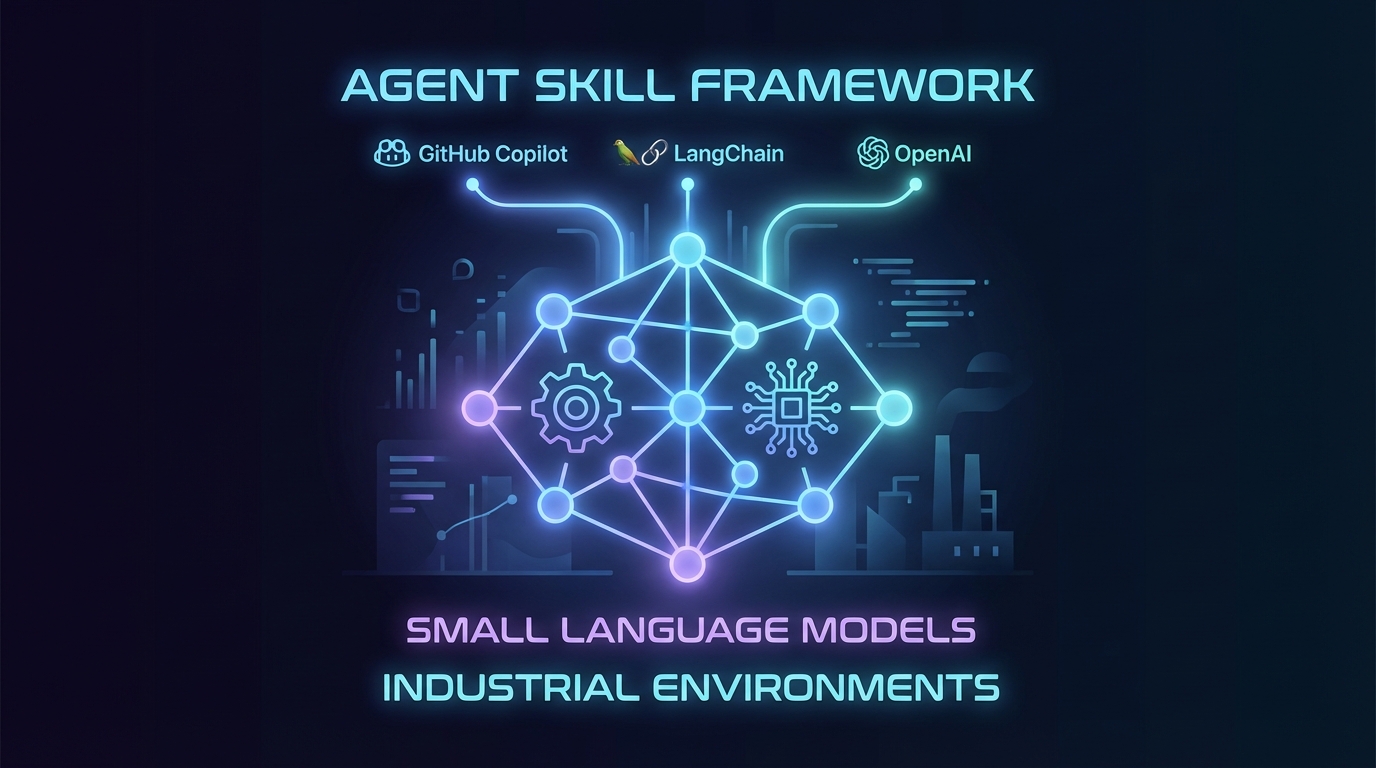
Agent Skill Framework: Perspectives on the Potential of Small Language Models in Industrial Environments

Agent Skill Framework: Perspectives on the Potential of Small Language Models in Industrial Environments

The Agent Skill framework, backed by GitHub Copilot, LangChain, and OpenAI, shows significant promise for small language models (SLMs) in industrial contexts. A study introduces a formal definition of the Agent Skill process and evaluates various language models, revealing that moderately sized SLMs (12B-30B parameters) greatly benefit from the framework. Conversely, smaller models struggle with skill selection. Notably, code-specialized models around 80B parameters match closed-source performance while enhancing GPU efficiency. These insights aid in optimizing the deployment of Agent Skills in environments constrained by data security and budget.

arXiv
Big Tech Says Generative AI Will Save the Planet. It Doesn't Offer Much Proof

Big Tech Says Generative AI Will Save the Planet. It Doesn't Offer Much Proof

A new report by Joshi, backed by environmental groups, reveals that many claims about environmental initiatives lack substantial evidence. The findings question the validity of various programs and suggest a need for more rigorous data to support environmental policies. This could have implications for funding and public trust in these initiatives.

Wired
Personalization features can make LLMs more agreeable

Personalization features can make LLMs more agreeable

Recent research highlights a concerning issue with large language models (LLMs) that retain user information for personalized interactions. The study reveals that despite the benefits of personalization, these models risk compromising user privacy by storing sensitive data. This raises critical questions about data security and user consent in future LLM deployments.

Mit.edu
India Fuels Its AI Mission With NVIDIA

India Fuels Its AI Mission With NVIDIA

India is hosting the AI Impact Summit, gathering global leaders and industry experts to discuss the future of AI. Key topics include ethical AI deployment, regulatory frameworks, and collaboration between governments and tech companies. Notable attendees include heads of state and leaders from major AI firms, aiming to foster international cooperation and set standards for AI development.

Nvidia.com
Topping the GPU MODE Kernel Leaderboard with NVIDIA cuda.compute

Topping the GPU MODE Kernel Leaderboard with NVIDIA cuda.compute

Python remains the leading language for machine learning due to its user-friendly nature, but achieving optimal GPU performance often requires using C++ for custom kernel development. Recent advancements aim to simplify this process, enabling developers to write high-performance GPU code directly in Python, streamlining workflows and enhancing productivity.

Nvidia.com
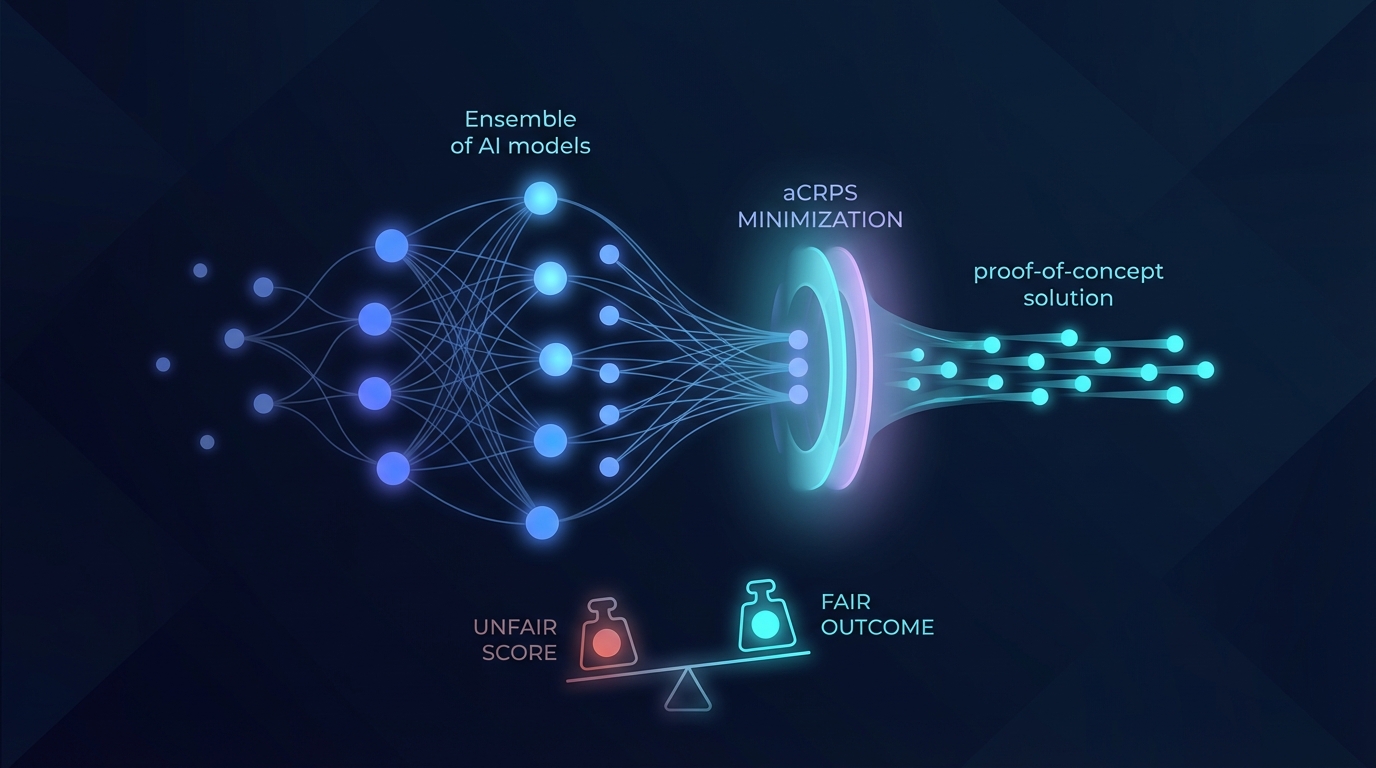
Ensemble-size-dependence of deep-learning post-processing methods that minimize an (un)fair score: motivating examples and a proof-of-concept solution

Ensemble-size-dependence of deep-learning post-processing methods that minimize an (un)fair score: motivating examples and a proof-of-concept solution

The article discusses the challenges of using adjusted continuous ranked probability score (aCRPS) for training ensemble forecasts, particularly when structural dependencies between members are introduced. It highlights two problematic approaches: linear member calibration and a deep-learning method that can create over-dispersion issues. The authors propose "trajectory transformers," adapting the PoET framework to maintain conditional independence in forecasts. This method effectively reduces systematic biases and improves reliability in weekly mean temperature forecasts from the ECMWF system, regardless of ensemble size (3 vs. 9 members in training; 9 vs. 100 in real-time).

arXiv
Solving Parameter-Robust Avoid Problems with Unknown Feasibility using Reinforcement Learning

Solving Parameter-Robust Avoid Problems with Unknown Feasibility using Reinforcement Learning

Recent research introduces Feasibility-Guided Exploration (FGE), a method addressing the limitations of deep reinforcement learning in reachability problems. FGE identifies feasible initial conditions and learns a safe policy, outperforming existing methods by over 50% in coverage for challenging scenarios in the MuJoCo and Kinetix simulators. This approach enhances safety in high-dimensional control tasks.

arXiv
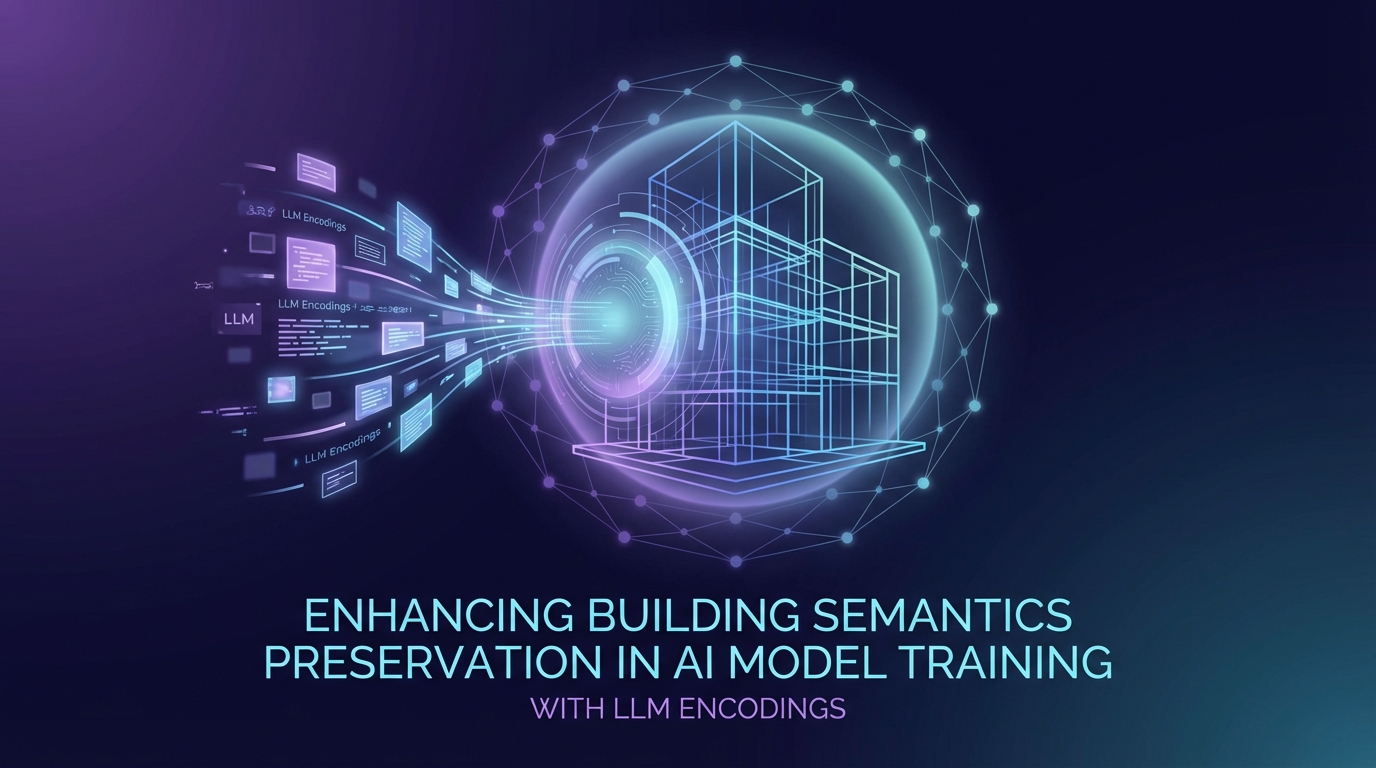
Enhancing Building Semantics Preservation in AI Model Training with Large Language Model Encodings

Enhancing Building Semantics Preservation in AI Model Training with Large Language Model Encodings

A new study reveals that using large language model (LLM) embeddings improves AI training for building semantics in the architecture, engineering, construction, and operation (AECO) industry. Testing on 42 building object subtypes, the approach outperformed traditional one-hot encoding, with the llama-3 compacted embedding achieving a weighted average F1-score of 0.8766. This method enhances AI's ability to interpret complex semantics, indicating significant potential for broader application in AECO tasks.

arXiv