QUPID: A Partitioned Quantum Neural Network for Anomaly Detection in Smart Grid
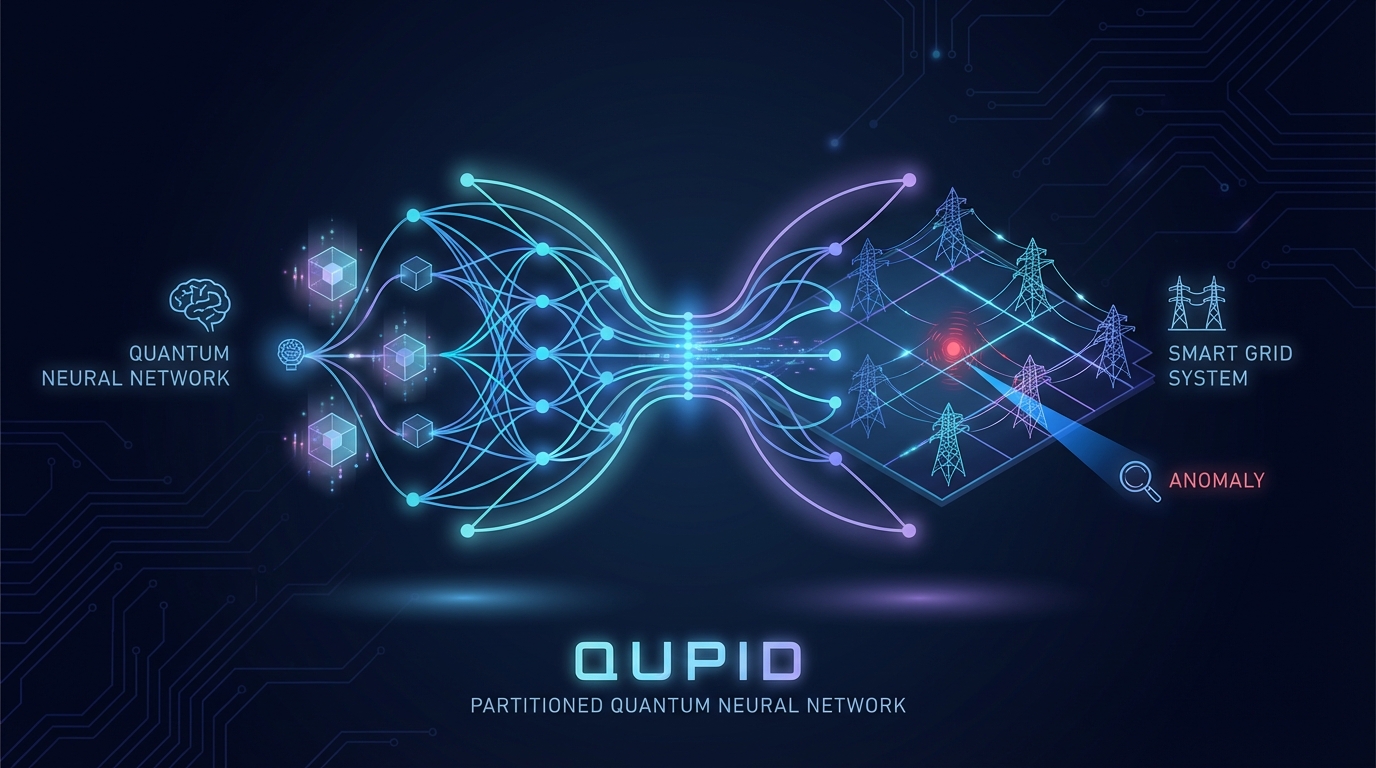
Image generated by Gemini AI
Researchers have introduced QUPID, a partitioned quantum neural network designed for anomaly detection in smart grid systems. Unlike traditional machine learning models, QUPID leverages quantum-enhanced features for better handling of complex data and increased resilience to adversarial threats. Its extension, R-QUPID, incorporates differential privacy without compromising performance. This approach also addresses scalability issues, allowing for efficient deployment in large-scale smart grid environments, significantly enhancing anomaly detection capabilities.
QUPID: Advancements in Anomaly Detection for Smart Grids
Researchers have introduced QUPID, a partitioned quantum neural network designed to enhance anomaly detection in smart grid systems. This approach addresses the limitations of conventional machine learning models, particularly their vulnerability to adversarial attacks.
The proposed QUPID model surpasses traditional state-of-the-art ML methods in anomaly detection and introduces R-QUPID, an extension that incorporates differential privacy to bolster performance.
Experimental Validation
Experimental results demonstrate that both QUPID and R-QUPID significantly improve anomaly detection capabilities compared to traditional ML techniques. The findings underscore the potential of quantum neural networks in enhancing the security and reliability of smart grid operations.
Related Topics:
📰 Original Source: https://arxiv.org/abs/2601.11500v1
All rights and credit belong to the original publisher.